
Paint Correction: The Science of a Mirror Finish
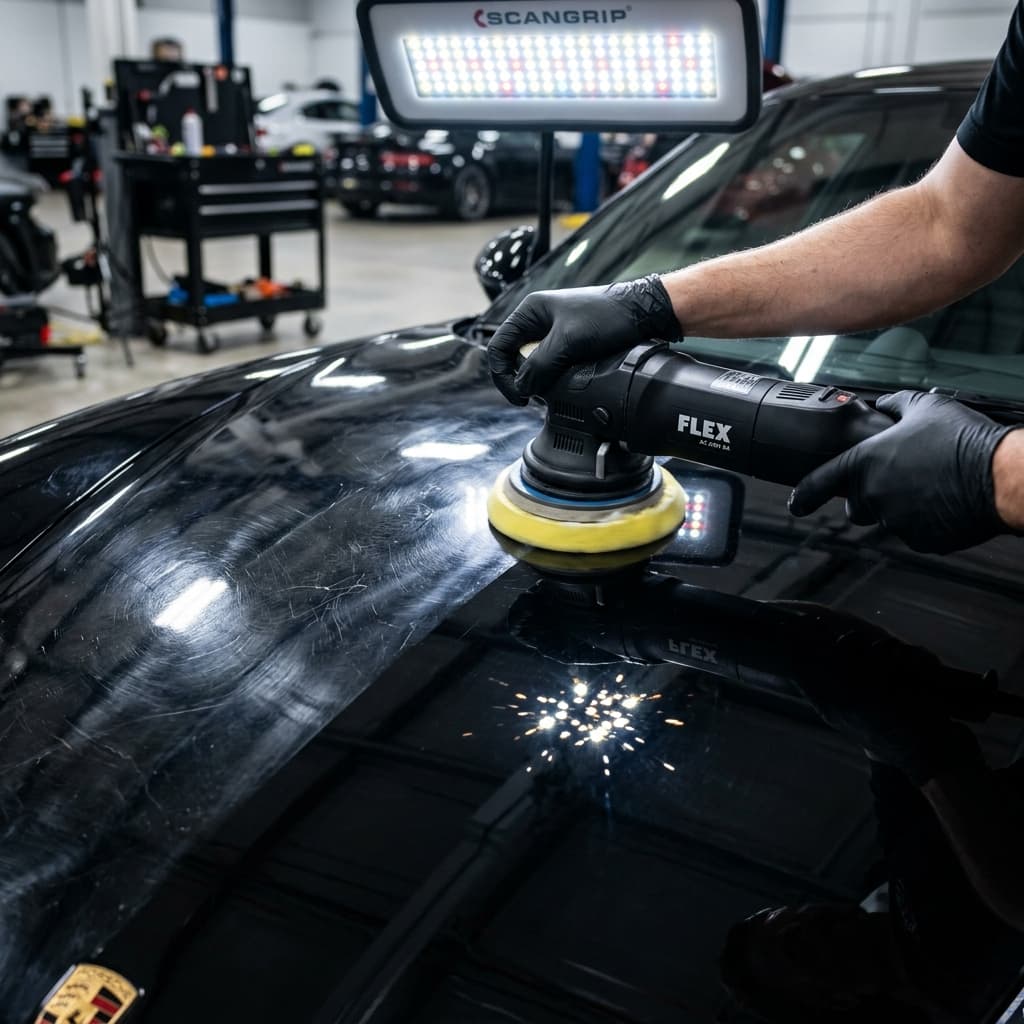
Paint correction is the heart of professional detailing. It is the difference between a car that is "clean" and a car that is "spectacular."
At Carhub Detailing, we don't just "polish" cars; we restore them. In this deep dive, we'll explain the difference between valeting and correction, the stages involved, and why a perfectly leveled clear coat is the only way to achieve true depth and clarity.
The Problem: Swirls & Defects
Have you ever looked at your car under a petrol station light and seen a "spider web" of tiny scratches? Those are swirl marks. They are caused by improper washing, abrasive sponges, and automatic car washes. These microscopic valleys in your paint catch the light, scattering it and making the paint look dull and hazy.
The Solution: Leveling the Clear Coat
Paint correction is the surgical removal of a microscopic layer of clear coat. By using various combinations of machine polishers, pads, and abrasive liquids, we "level" the surface until the scratches are gone. Once the surface is perfectly flat, light reflects off it uniformly, creating that famous mirror-like reflection.
Our Correction Protocol
We use ultrasonic depth gauges to measure how much clear coat is available. This ensures we never take too much paint off and preserve the long-term integrity of your car.
Before a polisher touches the car, we must remove all iron deposits and tar using chemical cleaners and a clay bar. Polishing a dirty car just causes more damage.
Understanding the Stages
Single-Stage Correction
Also known as an "Enhancement Detail." This uses a one-step polish to remove light swirls and restore gloss. Typically removes 50-70% of defects.
Multi-Stage Correction
A heavy-duty "cutting" stage to remove deeper scratches, followed by a "refining" stage to restore maximum clarity. Typically removes 90-95% of defects.
Why Correction Before Protection?
Applying a Ceramic or Graphene coating over swirled paint is like putting a high-end glass case over a dirty diamond. The coating will actually **magnify** the defects. This is why we insist on at least a light correction before any semi-permanent protection is applied.
The Carhub Detailing Standard
We use Scangrip LED lights to inspect our work. If it's not perfect under a 2000-lumen inspection light, it's not finished.